Finding
94% said short 5–10-minute daily routines were doable; some independent-living residents still wanted 20–30-minute classes.
→
Decision
Recommended 5–10-minute daily sessions as the default, with longer full sessions on demand.
ForesightCares builds AVA Mobility, an app that assesses fall risk and guides exercise at home. I volunteered as a research collaborator and led the user research behind its guidance and content.
Older adults vary widely in energy, vision, tech comfort, and confidence. The app had to be safe, readable, and something people would actually come back to.
Co-developed IRB protocols and interviewed residents of two independent-living communities, a PT clinic, and a church group, using sample result pages and exercise sheets as prompts. Why: fall risk lives in daily routines that surveys miss.
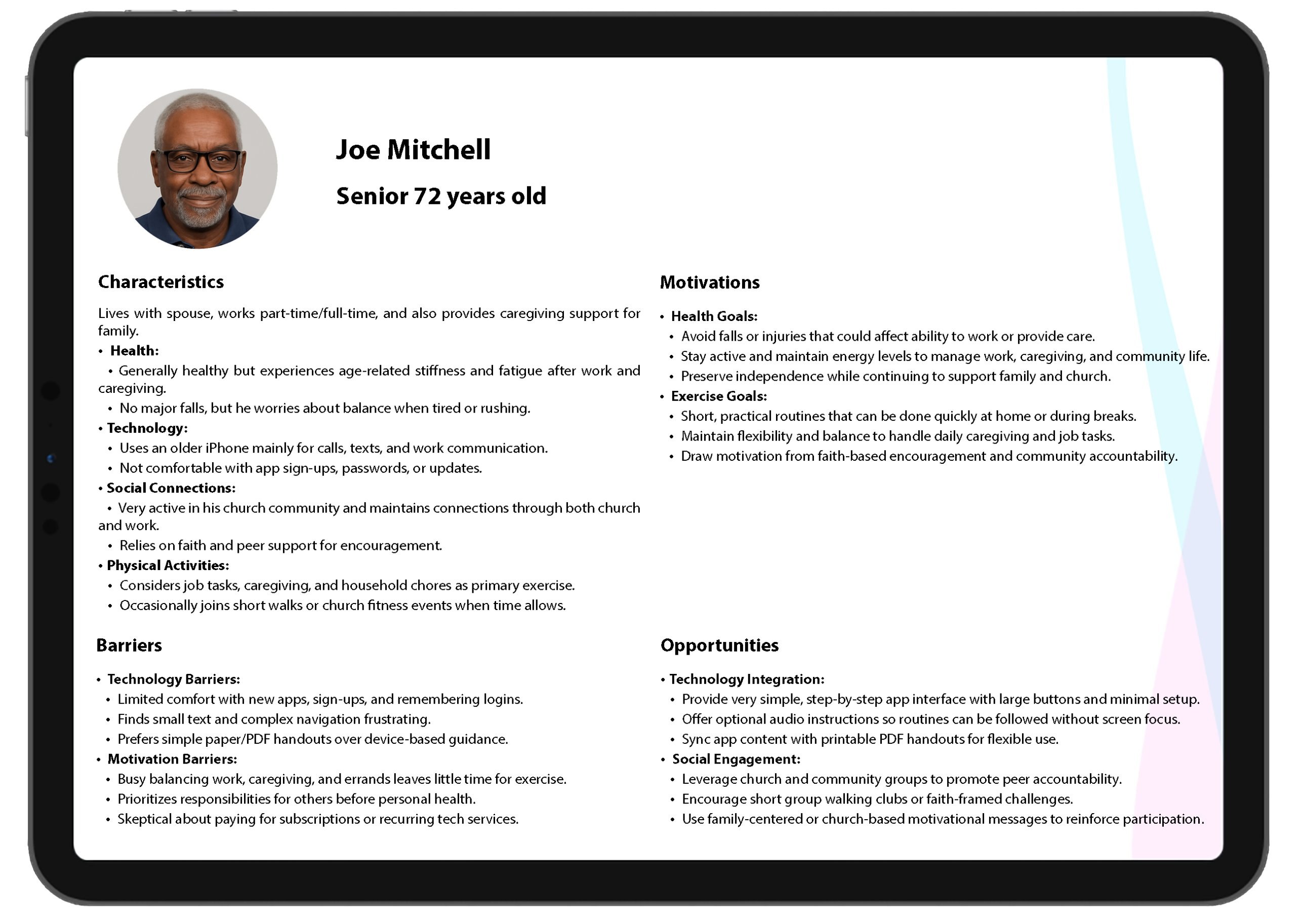
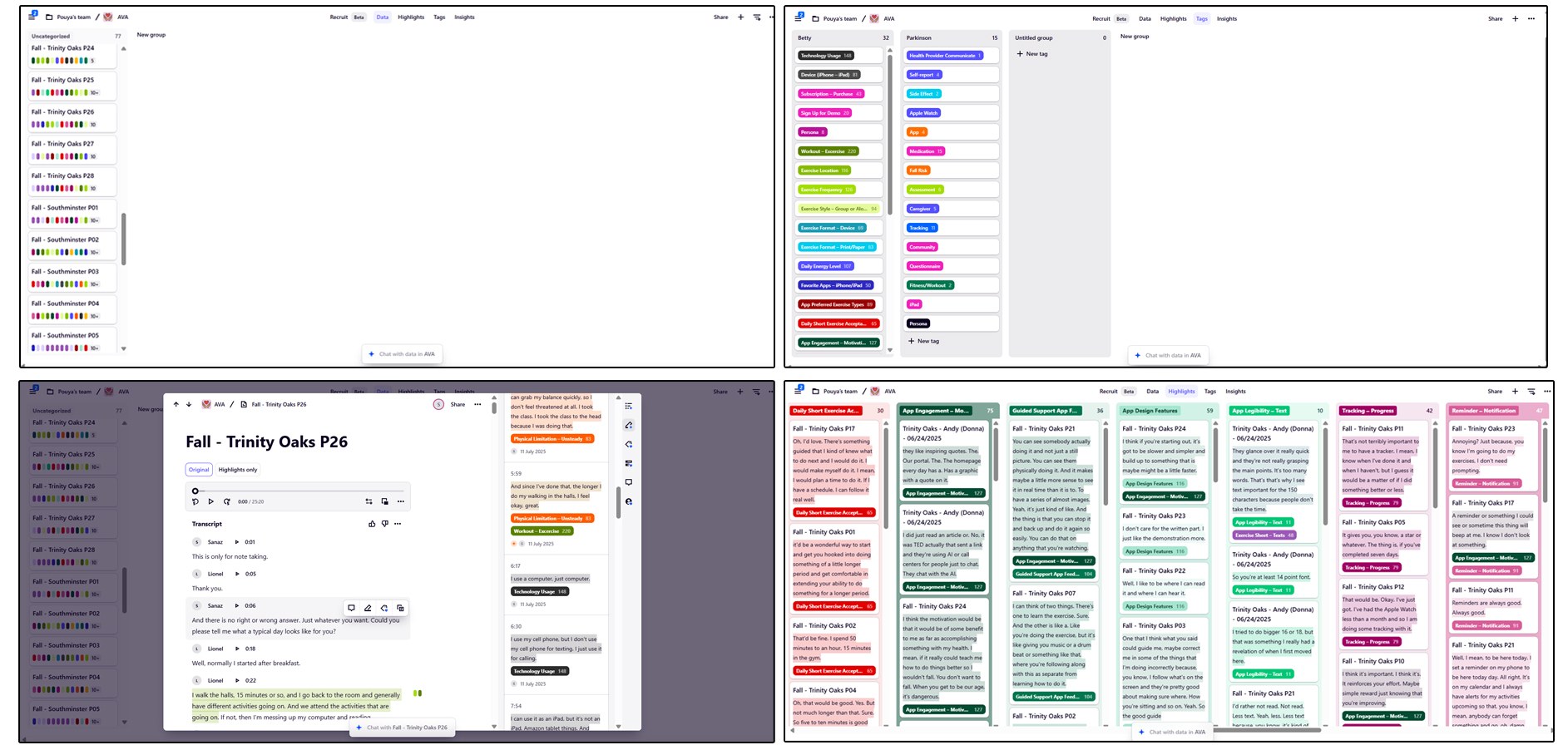
Ran the full pipeline: transcription, coding, themes, research report, design guidelines, and 2 contrasting personas (an independent-living resident and a busy community member). Why: the product team needed guidance they could act on, not raw transcripts.
Collaborated on testing the published at-home version, plus task analysis with older adults and caregivers. Why: to check the guidance worked in real homes.
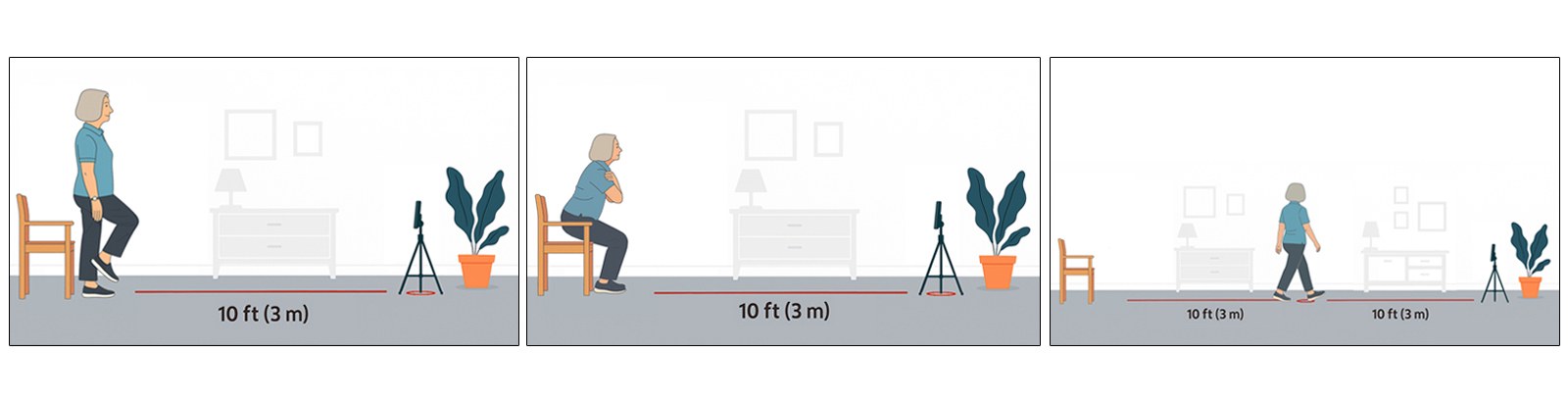
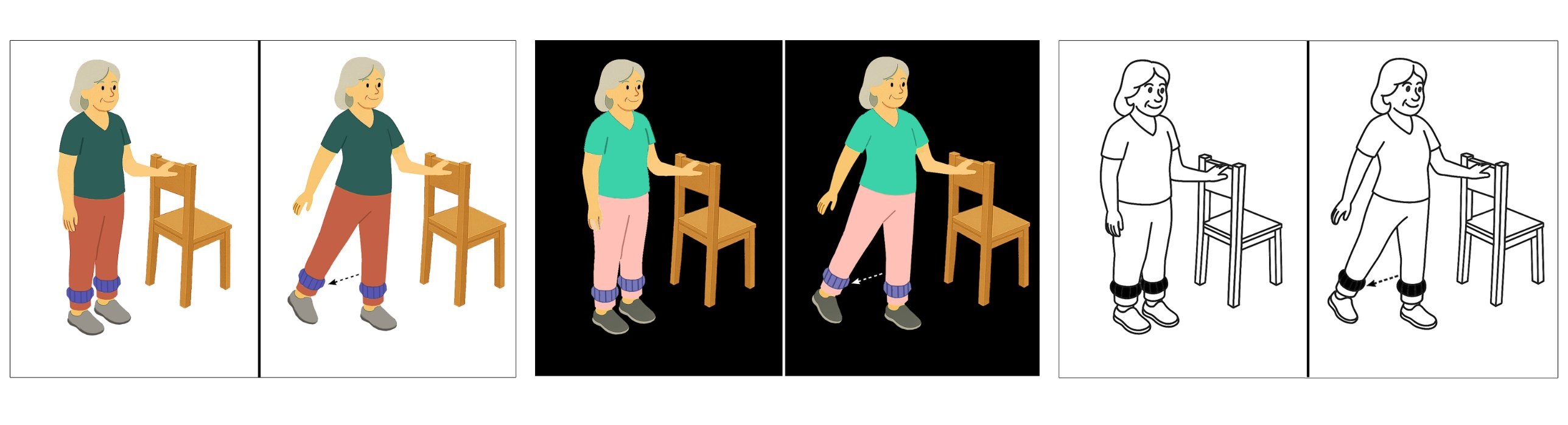
Produced exercise illustrations and AI-generated videos (OpenArt) in light and dark modes, 4 clinical videos, and redesigned ForesightCares.com. Why: accessibility findings had to show up in what users actually see.
“I'd love something guided that kind of knew what to do next.”
Older-adult participant94% said short 5–10-minute daily routines were doable; some independent-living residents still wanted 20–30-minute classes.
Recommended 5–10-minute daily sessions as the default, with longer full sessions on demand.
Floor exercises were mostly off-limits, and many participants worried about balance.
Recommended removing floor exercises: chair and standing options with visible safety cues.
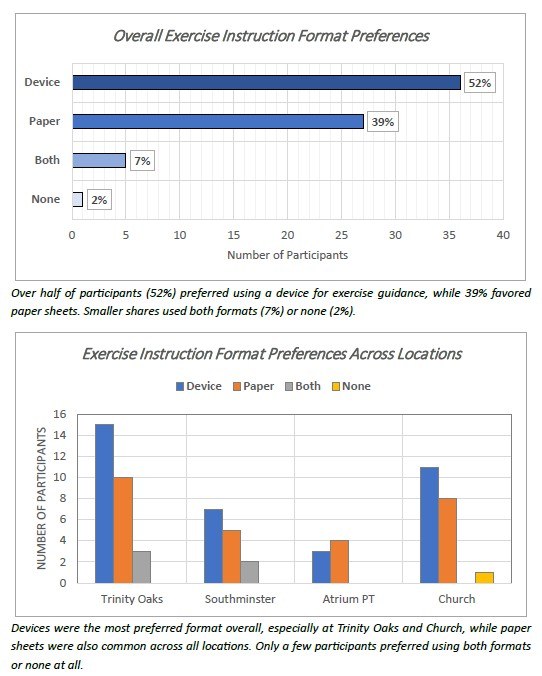
52% preferred a device and 39% paper; 26 of 41 asked would print the exercise PDF.
Device-first app with strong print support: one-page, high-contrast printable sheets.
Two distinct user types emerged: independent-living residents with time and group classes, and community members juggling work and caregiving.
Recommended two tracks: a full-featured app, and a simpler, low-cost, print-first version.
Reminders split opinion: 57% found them helpful, 43% annoying.
Reminders and progress tracking made optional and user-controlled.